A fake space agency doesn't help, but it is fun
Announcing Hubris, WASA's Mars exploration rover mission.
I have started a fake space agency.
You can find it at wasa.nz, and the first project is Hubris.
This is not a proposal to solve any of the world's problems with a small rocket. WASA is a home for projects about robots, software and the slightly unreasonable things that happen when you give a maker a workshop and too much imagination. Calling it a space agency is mostly a way to make the projects feel like they belong together. It is also, frankly, fun.
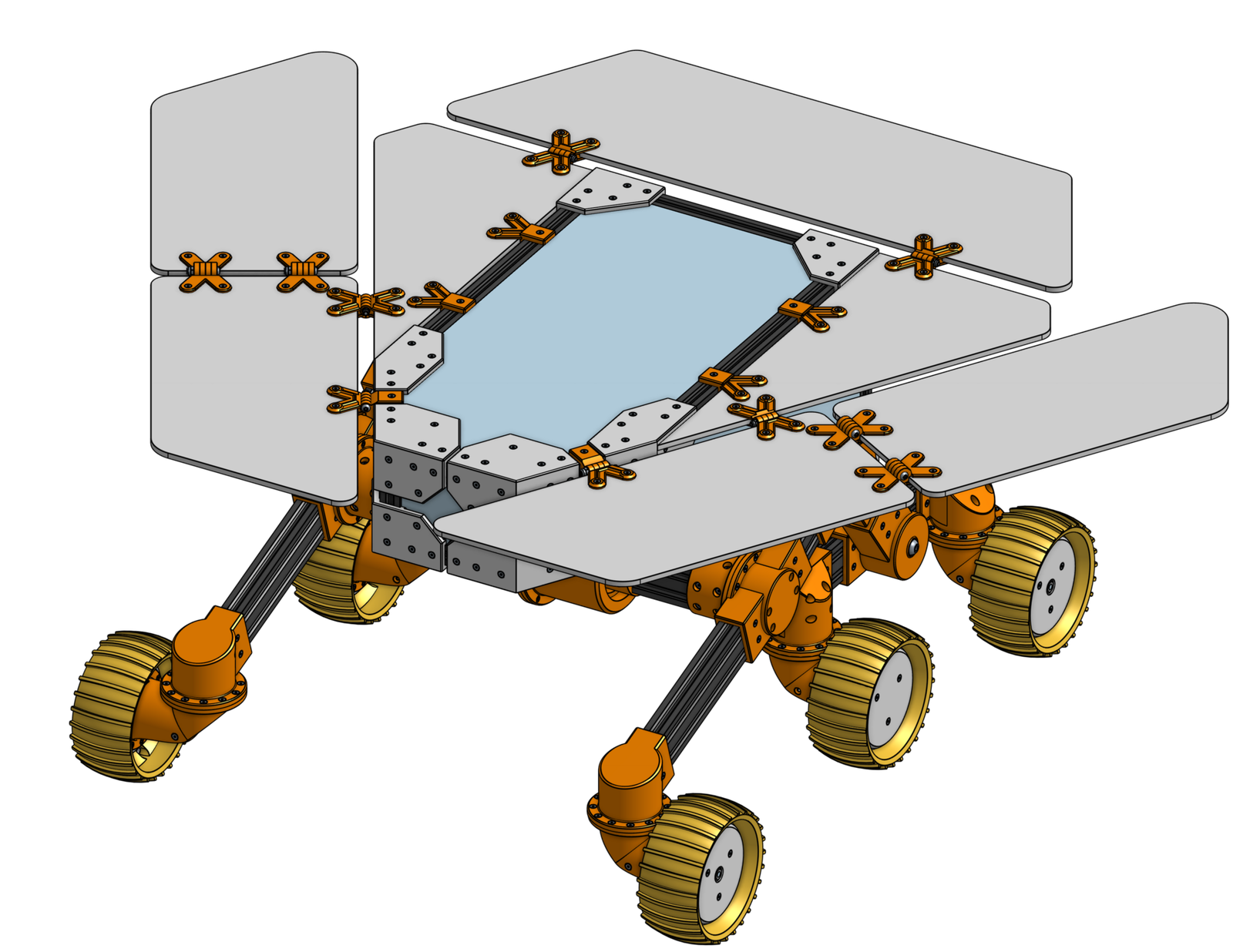
Hubris is WASA's first Mars exploration rover mission. The plan is to deploy a six-wheeled, rocker-bogie rover into a rural New Zealand paddock and ask it to drive, navigate, observe and communicate from the red frontier. The Wairarapa is not Mars, but it has loose soil, rocks, steep inclines, livestock and at least one locked gate, so it should make a useful simulator.
The rover's onboard software is being built with Elixir, Nerves and Beam Bots. It will have four driven wheels using skid steering, a GPS and a dual-lens camera. The rover is very much in development: the hardware is half built and only one quarter designed, and the software stack is still taking shape.
The name is a reminder that the distance between “this would be neat” and “this is a working robot” contains a lot of engineering.
Hubris is also a forcing function for Beam Bots. Robots can already move and be controlled, but movement is the easy part. Building a rover that can do something useful in an unfamiliar space means implementing things I don't necessarily know how to do yet, and improving the framework as those requirements become real. Beam Bots will need a proper camera abstraction so applications can work with different cameras without knowing all their hardware details. It will need object perception to turn images into things the robot understands, and depth perception to estimate where those things are in three-dimensional space.
Then there is the part where the robot has to avoid hitting them. That means obstacle avoidance, followed by navigation: choosing a route, tracking where the robot is, and making sensible progress towards a destination when the real world inevitably refuses to match the plan. Each new problem is a reason to make Beam Bots more capable, and Hubris gives those improvements somewhere concrete to go.
None of this requires pretending that a small collection of robots is a serious space programme. A fake space agency does not help with that. But it does provide a good excuse to work on the interesting parts, to make the projects a little more coherent, and to see how far the BEAM can take a robot.
So: welcome to WASA. Hubris is the beginning.